

兴安盟CXZ Fully Automatic Chromatography Separation Machine Set
Category:
Product Description

System Composition and Characteristics
Automated Control System
The chromatographic workstation, based on advanced DCS distributed control strategy, achieves control and data acquisition of pumps, valves, and various online detectors, facilitating multi-column series and parallel operations, ensuring the stability and accuracy of the process.
Special Online Detection System for Traditional Chinese Medicine
Includes detection of conventional process parameters such as flow, pressure, temperature, pH value (optional), conductivity (optional), and real-time detection of the content of effective parts (or components) of traditional Chinese medicine using ultraviolet spectroscopy (optional) and near-infrared spectroscopy (optional).
Chromatography Column Structure
The design of this chromatography column structure is excellent, with a reasonable height-to-diameter ratio, precise inlet and outlet fluid distribution devices, equipped with an automatic filling system and compressed air interface, ensuring the filling effect of the column and the regeneration effect of the packing, providing assurance for efficient separation.
Application of Chromatographic Separation Technology in the Separation and Purification of Natural Products
The chromatographic separation technologies commonly used in the separation and purification of traditional Chinese medicine include adsorption chromatography and ion exchange chromatography. Adsorption chromatography includes reversed-phase chromatography (C18 reversed-phase packing) and normal-phase silica gel chromatography; ion exchange chromatography is mainly used for the separation and purification of charged compounds. Currently, chromatographic separation technology plays an increasingly important role in the refinement of effective components of traditional Chinese medicine such as flavonoids, alkaloids, glycosides, organic acids, and polysaccharides.
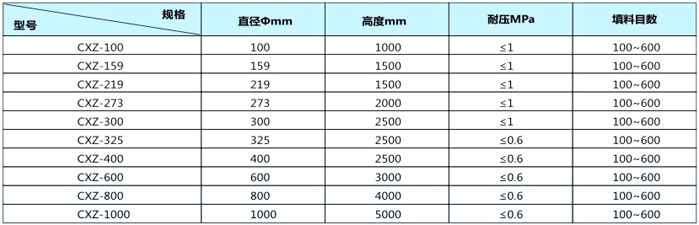
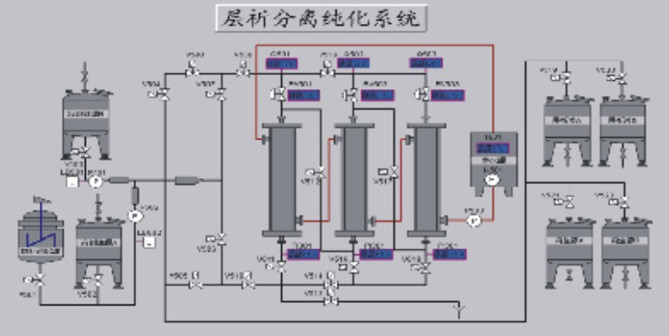
This unit is specifically designed and developed for the purification of target compounds on an industrial scale in the pharmaceutical industry. This preparative liquid chromatography column has an extremely high sample loading capacity, providing reliable assurance for increasing the yield of purified products at a lower cost.
Functional Characteristics
Widely used for the extraction and refinement of proteins, enzymes, monosaccharides, polysaccharides, and effective plant components. The characteristics of chromatographic separation are: mild operating conditions (room temperature, generally at atmospheric pressure); multiple pure components can be obtained simultaneously in one pass of the mixture; precise separation can yield high-purity products. This unit integrates modern computer automation control technology and online detection technology for process parameters, upgrading traditional manual chromatography equipment to improve reliability, making it easy to scale up the chromatography process and solve industrial production issues.
Application of Natural Product Separation and Purification
Development of small-scale processes, scale-up research of pilot processes, preparation of phytochemical standards and reference materials, etc. Widely used for the separation of pure products such as phenols, aldehydes, alkaloids, amino acids, steroids, mushrooms, flavonoids, quinones, organic acids, glycosides, sugars, nucleosides, etc. Examples include: paclitaxel, tea polyphenols, ginkgo flavonoids, bamboo leaf flavonoids, vitamin E, etc.
Next article
No.7, Tianhe Road, Yuhang Economic Development Zone, Hangzhou

All rights reserved© Zhejiang shuang zi Intelligent Equipment Co., Ltd. |SEO Tags | Business License